
Sixth Form Subjects
At Queen's College, Senior College (Sixth Form) pupils study a broad and academically rigorous programme, choosing three A-level subjects that reflect their interests, strengths and future ambitions. In some circumstances, pupils may choose to study four A-levels, subject to discussion with the Sixth Form team.
-
Art & Design
Art A level Entry Requirements
Minimum GCSE entry requirement is a 7 in Art.
Why study Art?
A‑Level Art & Design at Queen’s is an inspiring, ambitious and highly creative journey that empowers students to think independently, experiment boldly and develop a confident artistic voice. Rooted in a dynamic, exploratory ethos, the course invites students to push boundaries and immerse themselves in a rich variety of media, from drawing, painting and printmaking to textiles, installation and photography.
Students take the broad Art and Design qualification, giving them the freedom to play to their strengths while also discovering new ways of working. The course is both rigorous and deeply rewarding—an exciting blend of challenge, experimentation and personal discovery. Our teaching is highly tailored to each individual, and is enhanced by life drawing classes, gallery visits, talks from practising artists, and hands‑on workshops that bring contemporary creative practice into the studio. This vibrant and supportive environment encourages every student to unlock their potential and flourish as an original thinker and maker.
If you enjoy exploring ideas, experimenting with materials and approaching the world with curiosity and imagination, Art and Design offers a stimulating and fulfilling pathway for your A‑Level studies.
What will I study? How will I be assessed?
Students follow the Edexcel Advanced GCE in Art & Design. Over the two‑year course, you will develop a substantial personal investigation based on a theme that genuinely interests you. This allows you to research widely, experiment freely and take meaningful creative risks as you form an authentic and cohesive body of work.
Your A‑Level culminates in a major timed practical examination at the end of the second year. During this final piece, you will draw together the ideas, processes and techniques you have refined throughout the course to create a resolved, ambitious outcome that reflects your personal artistic journey.
What skills will I gain? Where can Art lead?
A creative outlook is a prerequisite for many careers and there are a great many areas of specialisation within the field of Art & Design for future study such as:
Architecture Animation Applied and Decorative Arts Design, Branding and Marketing Design Culture Digital 3-D Design Fashion Design Fashion Promotions Film and Video Production Fine Art Furniture Design Graphic Design Illustration Interior Design Interior Design Product Design Photography Printmaking -
Biology
Biology A level Entry Requirements
Minimum GCSE entry requirement is a 7 in Biology.
Why study Biology?
What are we? Where do we come from? Where are we going? If you want to know the answers to these questions, then Biology is for you.
What will I study? How will I be assessed?
The OCR Biology A-level course is composed of three examination papers, each two hours in length:
Paper 1:
Biological Processes (100 marks)
Paper 2:
Biological Diversity (100 marks)
Paper 3:
Unified Biology (70 marks)
What skills will I gain? Where can Biology lead?
The Biology A-level course helps students develop a number of skills:
- How to collect data and evaluate it
- How to investigate facts and use deduction
- How to put over your point of view effectively
- How to take responsibility for your own learning.
Biology is one of the most popular A-level subjects in the country, attracting students studying a wide range of other subjects.
Many of these students enjoy the subject so much they eventually choose a biologically related degree course. Biology can lead to careers in medicine, dentistry, biological, veterinary or environmental sciences, biochemistry, genetic research, biotechnology, psychology, forensic medicine, scientific journalism, law, wildlife film and programme-making, neuroscience … and many more!
So, whatever field you will eventually work in, you will find Biology a very rewarding and challenging course that will help you develop many of the skills essential for a successful career.
-
Business
Business A level Entry Requirements
Minimum GCSE entry requirements are a 6 in an English subject AND 6 in Mathematics.
Why study Business?
Business Studies A-level is a good choice for anyone interested in the world of commerce and entrepreneurship. It's a great way to prepare for university courses in the fields of business and management and to equip yourself with the know-how to start up your own business or follow a career in finance, accounting, marketing, or management post-university.
Throughout the course, you will engage with the world of business through the context of current developments and real situations. You will learn how management, leadership and decision-making can improve performance in marketing, operational, financial, and human resources. You will also explore the interrelated nature of business activities and the effect they have, be they large or small, UK or internationally focused and in different sectors such as the service sector or manufacturing.
What will I study? How will I be assessed?
Within the proposed Edexcel specification, topics covered include ‘What is Business?’, managers, leadership and decision-making, strategic analysis of the position of a business, choosing strategic direction, and managing strategic change. Assessment is by way of three final exams at the end of the second year. There is no coursework.
What skills will I gain? Where can Business Studies lead?
Even if you don’t aspire to become a budding entrepreneur, there’s plenty to gain from the subject:
- Planning and decision-making capabilities
- Mathematical skills
- Adaptability and flexibility
- Understanding how businesses function
- Analytical skills
- Critical thinking and problem-solving
- Financial management
- Leadership skills
- Marketing
Business is a pragmatic subject and can open up a wide range of opportunities, including management, marketing, finance, and human resources. The skills you will gain can be applied to a wide range of other fields, from politics and law to journalism and education. Overall, a Business A-level can be an excellent way to develop your skills, expand you knowledge, and prepare for your future career.
-
Chemistry
Chemistry A level Entry Requirements
Minimum GCSE entry requirements are an 8 in Chemistry AND a 7 in Mathematics.
Why Study Chemistry?
Chemistry is the study of substances - from plastics to painkillers, metals to microchips, the air you breathe, the food you eat, the clothes you wear and the complex chemicals in living organisms. It will be challenging, interesting, rewarding and hard work. You will use computers for information retrieval and data-logging. Practical work is important and will include synthesising dyes, analysing aspirin, calculating enthalpy changes and determining the rate of a reaction.
Chemistry is quite a demanding A-level. You will need to have good grades for Science and Mathematics at GCSE. You will need to be well-organised and prepared to work hard. If you have enjoyed Chemistry at GCSE level then you will probably continue to enjoy it at A-level but you do need to bear in mind that A-level Chemistry is more mathematical.
What will I study? How will I be assessed?
The AQA Chemistry course is composed of three examination papers, each two hours in length:
Paper 1:
Relevant physical chemistry topics (atomic structure, amount of substance, bonding, energetics, chemical equilibria, Le Chatelier's principle and Kc, oxidation, reduction and redox equations, thermodynamics, equilibrium constant Kp for homogenous systems, electrode potentials and electrochemical cells, acids and bases); inorganic chemistry; relevant practical skills.
Paper 2:
Relevant physical chemistry topics (amount of substance, bonding, energetics, chemical equilibria, Le Chatelier's principle and Kc, rate equations); organic chemistry; relevant practical skills.
Paper 3:
Any content from papers 1 and 2, including relevant practical skills.What skills will I gain? Where can Chemistry lead?
As well as gaining knowledge in traditional fields of Chemistry (organic, inorganic, physical and analytical), most Chemistry degrees now also include modules in interdisciplinary areas (chemical biology and physics) and some may include modules in applied Chemistry (medicinal, environmental). This gives a good balance of scientific knowledge, both specialist and general.
Chemistry is also studied in an environmental and social context, so you gain awareness of its ethical implications, as well as issues relating to environmental impact and sustainability.
The study of Chemistry provides you with the skills to pursue a career in a wide range of sectors. For example, according to a recent study, around a quarter of Chemistry graduates in full-time work chose to pursue careers in scientific research-related roles. Other popular areas of work included other technical occupations, business and finance, commercial, industrial and public sector management and education. Chemistry can lead to careers in Medicine, chemical engineering, forensics, pharmacology, dietetics, meteorology, art restoration, environmental health, scientific journalism, patent law, accounting, banking and many others.
-
Dance
Art A level Entry Requirements
Minimum GCSE entry requirements are a 7 in English Language and 7 in GCSE Dance OR Grade 5 in Modern / Ballet OR an exceptional audition.
Why study Dance at A-level?
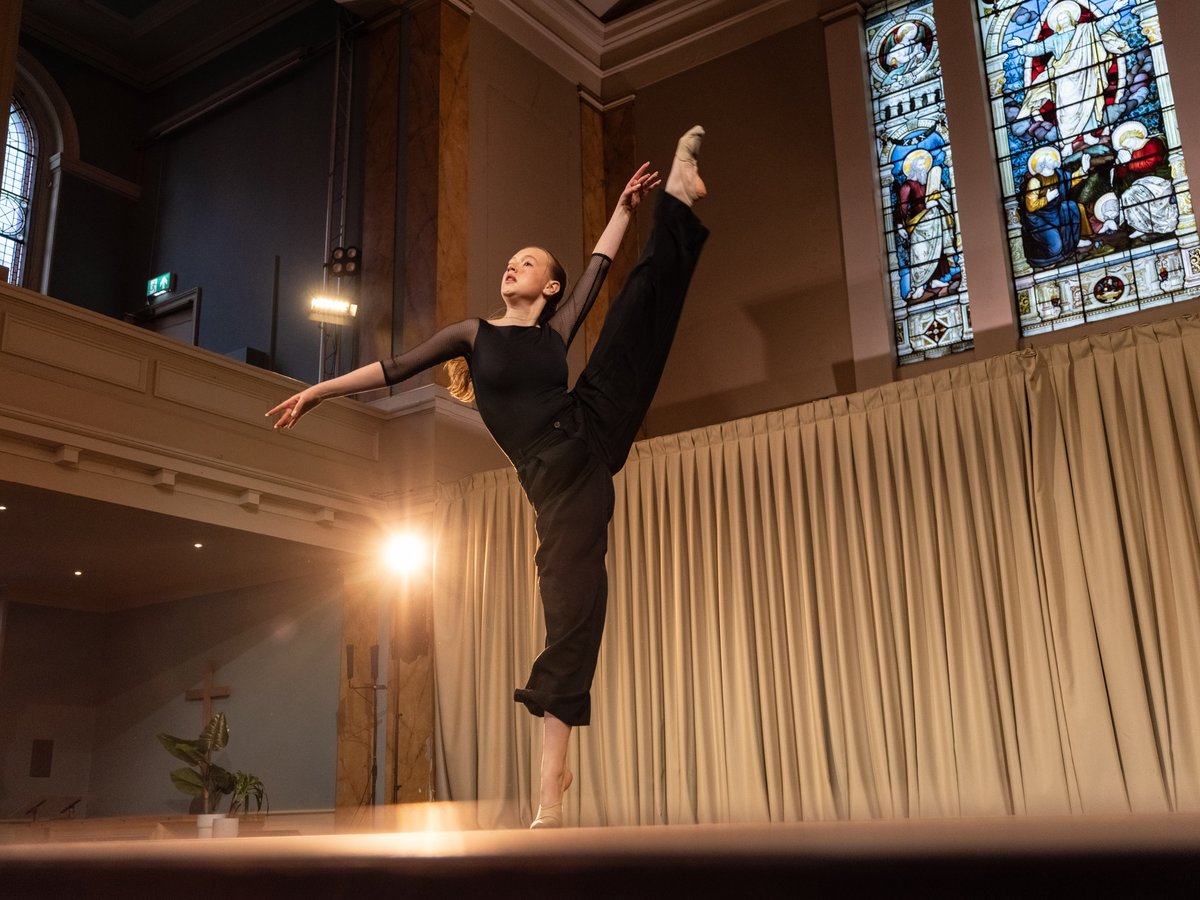
A-level Dance is a dynamic qualification which encourages students to develop their creative and intellectual capacity. The AQA specification reflects both historical and current Dance practices, ensuring its relevance to all pupils. Study of this A-level will inspire a lifelong passion and appreciation for Dance.
The course is suitable for anyone wanting to pursue the Arts or Dance in Higher Education, as well as for those who are creative, ambitious and critical thinkers.
What will I study? How will I be assessed?
A-level: Unit 1: Performance and Choreography – Practical exam (50%)
- Solo performance linked to a specified area of study
- Performance in a quartet
- Group choreography
A-level: Unit 2: Critical Engagement – Written Exam 2.5 hours (50%)
- Section A: Short answer questions and one essay question on the compulsory set work/area of study
- Section B: Two essay questions on the second set work/area of study
What skills will I gain? Where can Dance lead?
Transferable skills such as teamwork, communication and problem-solving skills are developed throughout the course. All of these are sought after skills by employers and will help students stand out in the workplace whatever their choice of career.
A creative outlook is a prerequisite for many careers and there are diverse opportunities within the field of dance such as:
Choreographer Dance Performer Community Dance Practitioner Dance/Arts/Culture Officer Costume/Set Designer Dance Company Education Specialist Dance Film Maker Dance Movement Therapist Dance Journalist Dance Lecturer Academic Researcher Dance Photographer Dance Project Coordinator Dance Teacher Dance Producer Dance Science Lighting Designer/Technical Production Pilates Instructor Yoga Instructor Youth Worker -
Drama & Theatre Studies
Drama A level Entry Requirements
Minimum GCSE entry requirement is a 7 in Drama.
Why study Drama and Theatre?
A-level Drama and Theatre combines performance and research. We explore plays and inspirational practitioners from Brecht to Boal, from The Paper Birds to Complicite, from Stanislavski to Frantic Assembly and many more. Students develop their own theatrical taste as a critic of live productions. It requires teamwork, communication skills and the ability to think independently. It is a challenging, demanding and rewarding subject, both intellectually and creatively.
The subject is ideal for those who are creative, experimental, thoughtful, logical and collaborative.
What will I study? How will I be assessed?
There are similarities to the Edexcel GCSE Course, which we also follow. At A-level you explore Live Theatre, texts and practitioners in more depth and detail, and perform a longer extract of a play.
Component 1:
Devising (40 %) (Internally assessed) Students devise an original piece using one key extract from a performance text and a theatre practitioner as stimuli. They must produce a written portfolio of between 2,500 - 3,000 words and the devised performance/design realisation.
Component 2:
Text in Performance (20%) (Externally assessed by visiting examiner) Students present a group performance of one key extract from a performance text and a monologue or duologue performance from a key extract from a different performance text.
Component 3:
Theatre Makers in Practice (40%) (Externally assessed) Students will sit one 2 hour 30 minute exam. This will ask students to evaluate a live theatre performance they have seen, explain how they would realise an extract from a performance text they have studied ("Page to Stage: Realising Performance Text)) and produce an extended answer on another performance text they have studied ("Interpreting a Performance Text"), where they explore their own creative vision as a director.What skills will I gain? Where can Drama lead?
Students have gone on to study at drama schools, music and performing arts colleges, as well as leading universities. Many former pupils are now working professionally within the industry, including recently on BBC Drama.
The transferrable skills learnt also stand students in good stead for careers from teaching to medicine, from the law to retail.
Professor Guthrie, Department of Neurobiology, Kings College, London said:
'Having achieved good grades in at least 2 or 3 science A levels is a pre-requisite for entrance to university to read biomedical sciences or medicine. However, demonstrating excellence in Drama would also count towards university entrance. In recent years, the medical curriculum, in particular, has been modified to place increasing weight and value on the ability of students to interact with patients, show self-confidence and excellent interpersonal skills. Coping with difficult situations, being able to think creatively and spontaneously, and being able to relate to a wide range of people and scenarios are vital aspects of training to be a doctor, and indeed what is now seen as the 'transferable skills' of so many degree programmes. There is no question that Drama enhances abilities and trains students in these important areas.'
At the heart of Drama is a pure aspiration:
How can stories help us understand the world as it is, and how can they encourage us to make it better?
-
Economics
Economics A level Entry Requirements
Minimum GCSE entry requirements are a 7 in English Language AND a 7 in Mathematics.
Why study Economics?
Economics examines one of the fundamental issues facing society today: the problem of how human and physical resources are developed and employed to produce the goods and services needed for survival, comfort and fulfilment. So it studies how scarcity, choice and the behaviour of households, companies and governments affect every aspect of our lives, as well as how these decisions impact society and the environment.
Studying economics will help you to understand the real world and interpret the stories behind the headlines:
- Why do energy prices keep rising?
- Why does the government have so much debt?
- Why are some people unemployed?
- Why are some firms successful while others fail?
- What can the government do to promote growth?
Economics helps you understand more about the world around you and why humans make the choices they do.
The course will teach you to analyse and logically evaluate economic models and data while equipping you with an in-depth understanding of major topical economic, political and social issues.
You will have the opportunity to take part in competitions such as the Business, Accounting and Skills Education (BASE) national business competition and the Institute of Fiscal Studies’ student investor challenge, as well as the Royal Economic Society’s essay competition. Many Economists also choose to get involved with Young Enterprise.
At A-level, Economics can be combined with any other subject, although to study it at university Mathematics A-level is often also required. Economics equips you with the skills to embark on many different careers, including a wide range of careers in the financial sector (from banking to accountancy or actuarial work), in law or in government.
What will I study? How will I be assessed?
AQA A-level economics consists of:
- Unit One: Individuals, firms, markets and market failure.
- Unit Two: The national and international economy.
- Unit Three: Economic principles and issues.
Assessment is by way of three externally set examinations at the end of the two-year course. There is no coursework.
-
English Literature
English Literature A level Entry Requirements
Minimum GCSE entry requirement is a 7 in English Literature.
Why study English?
English, with its combination of technical and creative elements, is a particularly rewarding A-level subject. Pupils in the Senior College enjoy close analysis, wider reading and most importantly, healthy debate. Discussion of literature ranges broadly across historical, political, philosophical, moral and psychological issues. We study literature as a means of questioning our deepest held beliefs, whilst also allowing us to empathise with situations and states of mind we are yet to encounter so that when we do face them we are all the better prepared.
What will I study? How will I be assessed?
At Queen's, we use the Cambridge International A-level syllabus. The two-year course is varied, flexible and covers a stimulating range of texts; you will study seven texts, plus a selection of unseen extracts, which will be examined in four exams at the end of the II Senior year. Please note that the set texts change frequently.
For the first module you will study a play (such as ‘Who’s Afraid of Virginia Woolf’), as well as selected poetry by Sylvia Plath.
The second module focuses on prose and unseen extracts. Novels that you might study include Whitehead’s ‘The Underground Railroad’. As well as this, you will also explore a wide variety of unseen extracts from prose, poetry and drama.
The third module covers Shakespeare (‘Henry IV Part One') and a twentieth century play such as ‘Long Day's Journey’ by Eugene O'Neill. You will also be required to evaluate a range of critical opinions on each text.
For the fourth module, you will study a pre-1900 text (such as Chaucer’s ‘The Wife of Bath’s Prologue and Tale’) as well as a post-1900 text such Coetzee’s ‘Waiting for the Barbarians’. You will be studying one prose text and one poetry text. This module also requires you to evaluate a range of critical opinions on each text.You will be encouraged to read widely beyond the set books and to attend Literary Society meetings; there will also be many opportunities to go to the theatre and to attend lectures and exhibitions outside school.
What skills will I gain? Where can English Literature lead?
English is one of the most popular university subjects. English students are taught to think analytically, consider different interpretations and to listen and respond to one another sensitively. English students go on to a wide range of successful careers.
-
French
French A level Entry Requirements
Minimum GCSE entry requirement is a 7 in French OR 6 with the discretionary guidance of the Head of Department.
Why study French?
Linguists at QCL love their dynamic and varied lessons, as well as the wide-ranging extra-curricular offerings such as theatre festivals, drama workshops, cinema trips and trips abroad. The study of a language is exciting and Old Queens always say how happy they are to have done an A-level in a language, whatever sector they go on to work in afterwards.
French is the third most important language that UK citizens need at the moment, in terms of trade, business, diplomatic and security priorities. French remains an important language for the Foreign and Commonwealth Office and is the language most frequently sought by those employers looking for language skills (49%). Speaking French, therefore, opens up many job and travel opportunities, as many Old Queens have discovered.
Studying and being able to speak French also enables pupils to access a wealth of literature, cinema, history and culture, both in France and in the Francophone world.
By the end of the course, you will be able to converse fluently and discuss complex issues in detail in discursive French. You will be set to continue studying any modern language you wish at university too, from Portuguese to Hebrew, Japanese to Arabic; there are many further opportunities that studying a language A-level opens up.
What will I study? How will I be assessed?
We prepare you for the Edexcel board specification. You will study cultural topics, such as film, literature, fashion and Francophone music alongside contemporary issues such as immigration and multiculturalism, with some important French history too. You will research your own topic to discuss in the oral examination (this could be a work of art, a musician, a building or a political issue, for instance) and will write essays on a book and film that you have studied, as well as be tested on your listening, reading and translation skills. Our linguists always say how much more interesting the A-level is compared to the GCSE – they are right!
Linguistic competence at a high level opens innumerable doors in the workplace and the global economy, with linguists being given clear preference in the job market thanks to the transferable skills of communication, textual analysis and interpretation, and attention to detail.
-
Geography
Geography A level Entry Requirements
Minimum GCSE entry requirement is a 6 in Geography OR if not taken, 7 in English Literature.
Why study Geography?
"The future of life on Earth is in our hands."
Geography plays a critical role in understanding and addressing global challenges, from climate change to sustainable economic development. Geography has appeal as arguably the most relevant and engaging A-level course for learners today.
Geography represents the intersection between sociology, politics, economics, history, biology and many more subjects. As a result of this diversity in study, it is no surprise that Geography is the best facilitating subject for university applications and the most employable degree.
Geographers are inquisitive, adventurous and driven to find out about the world. They are keen to develop a valuable understanding of the physical and human processes which produce the landscapes of today and they are interested in tackling the world's current problems.
If you want to know the answers to questions like "why was the 2020 wildfire seasons one of the worst in history?", "how will recent and predicted climatic change impact our coastlines?", "how can we build more liveable and sustainable cities?" or "what are the problems caused by unequal trade and migration?" then Geography is the subject for you.
What will I study? How will I be assessed?
The AQA A-level 7037 specification has three units:
- Physical geography: water and carbon cycles, coastal systems and landscapes and hazards.
- Human geography: global systems and global governance, changing places and contemporary urban environments
- Geography fieldwork investigation: non-examination assessment (NEA)
Unit 1 and 2 are assessed by examination whilst Unit 3 is a coursework assignment of 3,000 - 4,000 words long, which will present your independent analysis of data findings based on a project you have designed from start to finish.
What skills do I gain from Geography? Where can Geography lead?
Geography is an academically robust subject that will help you in your future studies and the world of work. You will develop an understanding of physical, social and economic processes and be able to plan, research, develop and test hypotheses and write reports. Geographers are numerate, literate and good team workers. You will learn to think analytically and critically as well as developing valuable computer skills. Moreover, The Department for Education found that female Geography university graduates earn over 10% more than the average female graduate.
You will find geographers working in a wide range of jobs, from finance to planning, working for environmental organisations to travel and tourism, law to international charities.
-
History
History A level Entry Requirements
Minimum GCSE entry requirement is a 7 in History.
Why Study A-level History?
History is important for everyone: a society without knowledge of its history is like a person without memory. No other subject creates such debates and controversies and historical understanding is essential if we are to understand the present and avoid the mistakes of the past.
History is useful to you. You will build up an immense knowledge and understanding of all aspects of human societies in a variety of periods and places. You will learn about change and continuity and about cause and effect.
As every subject has a past, history will also help you with all your other A-levels.
What will I study? How will I be assessed?
Edexcel A-level History Specification 9HI0:
- Paper 1, Option 1F: In search of the American Dream: The USA, c1917-96.
- Paper 2, Option 2F.2: South Africa, 1948-1994: from apartheid state to 'rainbow nation'.
- Paper 3, Option 31: Rebellion and disorder under the Tudors, 1485-1603.
- Coursework: Interpretations of the Holocaust.
Units 1–3 are assessed by examination. Unit 4 consists of one coursework assignment of 3000–4000 words which analyses and evaluates historical interpretations on one topic.
There will be regular visits to lectures, exhibitions and museums, as well as a residential field trip abroad to enhance your knowledge and understanding of the topics studied. Previous visits have been to Berlin and Kraków.
What skills will I gain? Where can History lead?
- You will learn to read in depth and to take effective notes.
- You will interrogate and evaluate a range of contemporary and secondary source material.
- You will learn to plan, organise and complete effective and well-argued essay answers.
- You will engage with historical controversies and learn to analyse and evaluate conflicting historical interpretations.
Your homework will encourage independent study: you will learn how to think – not what to think.
History can lead you anywhere. History students do all types of courses and careers: from media, law, medicine and business to teaching, journalism and museum work.
It is a rigorous and respected academic discipline that is highly regarded by universities.
-
History of Art
History of Art A level Entry Requirements
Minimum GCSE entry requirement is a 7 in English Literature OR one Humanities subject.
Why study History of Art?
This is a popular A-level choice at Queen's and a transformative subject to study when surrounded by the rich resources of London's galleries and museums. In a world saturated with imagery, learning about the means and language of perception has never been more valuable. At a time of global fragmentation, the power of art and artefacts to unify and help us engage with our past and present has, arguably, never been more urgent.
Students wishing to study the subject should be curious and enthusiastic about exploring intellectual concepts and visual material. Enjoyment and aptitude for English, History and PTE are the best guide to your likely success in History of Art. You do not need to have studied GCSE Art or History, and no practical work is involved!
What will I study? How will I be assessed?
The qualification is assessed entirely by two 3-hour examinations (50% each of the total grade). We follow the Edexcel Specification. There is no coursework.
Paper 1
A substantial part of the A-Level course involves learning how to look. In the first of the three modules for Paper 1, you will develop skills in understanding composition, form, colour and space in painting, sculpture and architecture. The second and third modules involve situating artworks related to ‘Nature’ and ‘Identities’ within their social, political, and economic context.
Paper 2
Paper 2 involves in-depth study of the Renaissance in Italy (1420-1520) and the British and French Avant-Garde (1848-1899). We look at the lives and careers of individual artists, and engage with critical texts by Vasari, Alberti and John Ruskin, among others. Key artists include Donatello, Raphael, Michelangelo for Italy; with Rodin and Holman Hunt for the Avant-Garde.
What skills will I gain? Where can History of Art lead?
Art History cohorts are small and supportive. Students will be able to develop their critical thinking skills and express their opinions in a stimulating environment. Being situated near the National Gallery, Tate Britain and the V&A means that works of art can be studied in situ. We also run trips abroad, with the most recent an interdisciplinary trip to Rome in March 2026.
Few students remain unchanged – new horizons and perspectives stay fresh long after the dates and facts have fulfilled their short-term examination purpose. Many students from Queen's have gone on to further their passions in the subject through undergraduate and postgraduate degrees, including Edinburgh, Bristol and Cambridge, most recently. Career possibilities are endlessly varied and include roles in conservation, museums and galleries, the heritage sector, the media, arts administration, journalism, advertising and teaching at all levels.
-
Italian
Italian A level Entry Requirements
Minimum GCSE entry requirement is a 7 in Italian OR 6 with the discretionary guidance of the Head of Department.
Why study Italian?
Linguists at QCL love their dynamic and varied lessons, as well as the wide-ranging extra-curricular offerings such as theatre festivals, drama workshops, cinema trips and trips abroad. The study of a language is exciting and Old Queens always say how happy they are to have done an A-level in a language, whatever sector they go on to work in afterwards.
The ability to speak Italian will certainly help pupils stand out in the job market. There is currently a massive deficit of UK-born citizens who can speak Italian, with only one per cent of businesses surveyed reporting levels of Italian good enough to conduct business deals leading to exports. Yet Italy is an important country in Europe and a leader in global industries such as fashion, automobile, design, food and travel. Italy is the third biggest economy in Europe.
Learning a foreign language is a skill in itself and brings its own rewards as you learn to understand magazines, TV programmes, novels, poetry, the news, and, most importantly, people who speak the language you are learning. You will also learn about Italy's fascinating and ever-evolving political, cultural and contemporary life.
By the end of the course, you will be able to converse fluently and discuss complex issues in detail in discursive Italian. You will be set to continue studying any modern language you wish at university too, from Portuguese to Hebrew, Japanese to Arabic; there are many further opportunities that studying a language A-level opens up.
What will I study? How will I be assessed?
We prepare you for the Edexcel board specification. You will study cultural and social topics, such as film, literature, and music. You will also study contemporary society, such as the changes in the Italian family, and issues, such as immigration and the mafia, along with a historical topic on the rise and fall of the fascist regime. You will research your own topic to discuss in the oral exam (this could be a work of art, a musician, a building or political issue, for instance) and write essays on a book and film that you have studied, as well as be tested on your listening, reading and translation skills.
Our linguists always say how much more interesting the A-level is compared to the GCSE – they are right!
-
Latin
Latin A level Entry Requirements
Minimum GCSE entry requirement is a 7 in Latin.
Why study Latin?
The Classical world has had and continues to have a staggering impact on our language, technology, culture and politics. Studying our ancient roots allows deeper engagement with a whole host of topics, which makes Latin A-level the perfect complement to Humanities, Modern Foreign Languages and Arts subjects. The logic of Latin grammar and the prevalence of scientific and technological jargon derived from Latin also make Latin A-level a perfect partner of the Sciences and Mathematics.
The A-level Latin course is wonderfully varied and interesting. It builds very naturally on the firm foundations of language and literary analysis developed at GCSE. Queen’s pupils have thoroughly enjoyed studying Latin at A-level. Many have become so passionate about Latin and Roman culture that they have chosen to read Classical subjects at university.
What will I study? How will I be assessed?
The OCR specification:
Like a GCSE, 50% of the course is on language and 50% on literature.
You will acquire much more vocabulary and a more sophisticated understanding of how the language works at A-level. However, as you will already have studied many of the constructions on the A-level syllabus at GCSE, the progression to A-level is more a smooth ramp than a big step up. Language continues to be assessed through a combination of translation passages, comprehensions and language analysis or prose composition (optional).
Similarly, you will already have begun to develop the literary skills you need for A-level at GCSE. The two essay types are similar to those at GCSE, but you will have more time to read more of each text and in greater depth than you will have had at GCSE. One type of essay requires analysis of how the author has manipulated language to convey a specific mood or message and the other type prompts discussion of broader themes from the text in English.
25% of the course is a study of prose literature. The current prose text is Cicero’s Pro Roscio Amerino, the speech that launched Cicero’s extraordinarily successful legal and political career. Sextus Roscius has been accused of murdering his own father! Friendless, impoverished and grief-stricken, his only hope lies with Cicero. Luckily for him, Cicero will stop at nothing to see his client acquitted. In this outrageous and gripping speech, Cicero risks offending the tyrant Sulla as he exposes a scandalous conspiracy to have Roscius’ father murdered and Roscius himself disinherited and executed.
25% of the course is a study of verse literature. The current verse text is Virgil’s Aeneid IV. This covers the timelessly moving tale of Dido and Aeneas’ ill-fated love affair. How will the hopelessly besotted Dido, queen of Carthage, react when she finds that her lover Aeneas has left her, to found his own city? Students enjoy discussing the antagonism between free will, divine intention and Fate, Roman attitudes towards love, duty and death and how the Aeneid can be viewed as propaganda in support of (or in subtle criticism of!) Augustus’ reign.
What skills will I gain? Where can Latin lead?
Through studying literature, you will develop the ability to probe a text, apply critical thinking skills to assess rhetoric, express yourself concisely and suspend judgement before leaping to a conclusion. You will acquire a solid base for understanding history, politics and culture generally, not just from the Roman period.
Through studying the language, you will develop an excellent command of Latin and sophisticated problem solving and logic skills. Additionally, you will boost your vocabulary and understanding of grammar in English.
Latin sets you apart from other applicants for university courses and jobs. It is highly regarded as an academic subject that hones critical thinking, empathy, analytical, organisational and communication skills as well as the obvious linguistic skills. For this reason, A-level Latinists have access to a wide range of professions. Latin can lead to a career in law, medicine, finance, science, computing, academia, architecture, engineering, marketing, politics and many other fields.
-
Maths & Further Maths
Maths A level Entry Requirements
Minimum GCSE entry requirement for Maths is an 8 in Maths; for Further Maths the minimum grade is a 9.
Why study Maths and Further Maths?
Mathematics is a highly enjoyable and challenging subject. It is intellectually demanding, logical and rigorous, and will develop your ability to problem-solve. Through studying Mathematics in the Sixth Form, you will expand your range of mathematical techniques, learn why methods work, prove results, and forge links between concepts. The applied side of the course is an opportunity to understand how Mathematics is used in real-world situations.
What will I study? How will I be assessed?
The courses taught at Queen's are A-level Mathematics and A-level Further Mathematics.
A-level Mathematics consists of:
- Pure Mathematics: algebraic methods, calculus, geometry, and trigonometry – the foundations of the subject
- Applied: formed of two distinct branches, Statistics which focuses on analysing data and probability, and Mechanics which models physical systems
Students who study Further Mathematics will explore more Pure Mathematics topics such as complex numbers, hyperbolic functions, and matrices. In addition, they will take two optional modules from a choice of Further Pure Mathematics, Further Statistics, Further Mechanics, or Decision Mathematics which is the study of algorithms.
Both A-levels are assessed purely through examinations; two Pure Mathematics examinations and one Applied paper (A-level), or two Pure Mathematics examinations and two options papers (Further Mathematics A-level).
What skills will I gain? Where can Mathematics lead?
As well as the careers that directly use the mathematics taught at A-level (these include the fields of Large Data, Science, Computing, and Economics), the skills gained through studying Mathematics are highly transferable and well regarded. Many jobs involve some form of data analysis and an ability to calculate and interpret statistics confidently and accurately is vital. In addition, numerical fluency, logical thinking, and systematic approaches to problems can be used in almost any field.
-
Music
Music A level Entry Requirements
Minimum GCSE entry requirement is a 7 in Music OR Grade 5 Theory and Grade 5 First Study.
Why study A-level Music?
Few subjects draw on and develop as many skills as are needed for A-level Music. This course enables musicians to shine in performance, composition, and the listening and appraising module. We study works by a broad and eclectic range of composers in far greater depth than encountered at GCSE level, from the recordings of Ella Fitzgerald to experimental electronic music of the 20th century and Romantic orchestral works which explore themes of the supernatural. You will learn not only how composers conveyed their musical intentions but also how we can utilise similar skills in our own compositional work.
This rigorous analytical study is combined with a busy performance schedule, preparing recitals on solo instruments or voice, alongside ensemble playing, all of which lead to greater communication and expression as performers.
Composers have the opportunities to use the latest composition software as part of this course, exploring a diverse range of styles when creating their own music. A-level students will also record repertoire and participate in the many concert opportunities available at the College.
This course has musical understanding and enjoyment at its heart and offers you the chance to immerse yourself in the vibrant musical community at Queen's.
What will I study and how will I be assessed?
Performing
This is a coursework submission that involves the preparation and performance on your instrument or voice. This part of the course really plays to your strengths as a performer! The recital is externally assessed via audio-visual recording and the performance time must be at least 10 minutes.
(35% of the total A-level.)Composing
This is a coursework submission and involves composing two separate pieces of music. One composition is written to a brief set by OCR and the other is to your own brief. The total length of your compositions will be four minutes (25% of the total A-level).
Listening and Appraising
The only part of Music that is an examination, this paper consists of four Areas of Study; the first two are compulsory and the other two are chosen from the four remaining options (Areas of Study 3 - 6):
- Area of Study 1: Instrumental Music of Haydn, Mozart and Beethoven
- Area of Study 2: Popular Song: Blues, Jazz, Swing and Big Band
- Area of Study 3: Developments in Instrumental Jazz, 1910 - present day
- Area of Study 4: Religious Music of the Baroque Period
- Area of Study 5: Programme Music 1820 - 1910
- Area of Study 6: Innovations in Music 1900 - present day
The examination paper consists of unfamiliar listening, questions on prescribed works for AoS1 & 2, and essays on works you have studied for your two optional Areas of Study.
What skills will I can? Where can Music lead?
A career in the music industry is rich and varied. Music degrees can lead to work as a performer (orchestral, solo or chamber), composer, music therapist, sound technician, theatre stage manager, conductor, engineer, radio producer, broadcaster or to work in music education. Pursuing Music at degree level will provide opportunities to study not only performance through a conservatoire but also composition, musicology, ethnomusicology, sound engineering, conducting and music education at university.
Even if you choose not to study Music beyond A-level, you will develop a vast range of useful skills through the course, including but not limited to:
- Communication
- Leadership
- Time management
- High-level listening skills
- Teamwork
- Analysis
- Software skills
- Planning and delivering long-term projects
- Creativity
A-level Musicians also significantly develop their self-confidence through the course.


-
Physics
Physics A level Entry Requirements
Minimum GCSE entry requirement is an 8 in Physics AND an 8 in Maths AND ideally be taking A level Maths.
Why study Physics?
Physics is the science of nature in the broadest sense. Physicists study the behaviour and properties of matter in a wide variety of contexts, ranging from the sub-microscopic particles from which all ordinary matter is made (particle physics) to the behaviour of the material universe as a whole (cosmology).
What will I study? How will I be assessed?
Physics is a demanding A-level subject; it requires a lot of dedication and hard work.
If you found Mathematics particularly difficult at GCSE then Physics is possibly not the subject for you. Take Physics if you find the subject interesting and would like to learn much more than was covered in the GCSE course.
Many of the theoretical concepts will be backed up with class practicals. These will involve using a variety of laboratory apparatus, as well as computer simulations and data logging.
We are particularly fortunate that the Institute of Physics is so near Queen’s, as they host a number of free lectures available to A-level students. Pupils also visit the Royal Observatory and the Diamond accelerator in Oxford.
The AQA Physics course is composed of three examination papers, each two hours in length:
Paper 1: Measurements and their errors; particles and radiation; waves; mechanics and materials; electricity; periodic motion.
Paper 2: Thermal physics; fields and their consequences; nuclear physics; assumed knowledge of measurements and their errors; particles and radiation; waves; mechanics and materials; electricity; periodic motion.
Paper 3: Practical skills and data analysis; astrophysics.What skills will I gain? Where can Physics lead?
Physics is important for a wide variety of careers. Many physicists work in research along with other scientists and mathematicians. The problem solving and logical skills gained from studying Physics are applicable to a whole range of other disciplines from law (particularly intellectual property and computer law) to architecture, accountancy and finance. Computing plays a major part in university Physics and many students go on to work in the computer industry with their qualifications.
-
Politics
Politics A level Entry Requirements
Minimum GCSE entry requirement is a 7 in History, English Literature or Religious Studies.
Why study Politics?
Politics A-level is concerned with the analysis of the nature of power. Students will explore the ways in which people can participate in the processes which create, constrain and uphold the structures of power in our society, as well as an in-depth understanding of the ideas which underpin contemporary political debate.
What will I study? How will I be assessed?
Pearson/Edexcel Politics 9PL0:
The Politics A-level curriculum consists of a comprehensive analysis of, and comparison between, the political systems of two of the most established modern democracies; those of the United Kingdom and the United States of America. The nature of democratic processes – elections, political parties, interest groups activity, civil liberties – in both societies is examined in detail. The systems of government of each system – the constitutional rules and the executive, legislative and judicial functions – are analysed and compared. The political philosophies which have underpinned debate within those systems since the nineteenth century – Conservatism, Socialism, Liberalism and Feminism – are also considered and evaluated.
Component 1 UK Politics: Political Participation and Core Ideologies
Component 2 UK Government and Non-core Ideology (Feminism)
Component 3 Comparative Politics: USAHow will I be assessed? Where can Politics lead?
Essay writing, based on serious reading of relevant texts, is the core skill which is developed in the course of studying Politics at A-level. The study of current developments in both the United Kingdom and the United States of America is also of central importance. Politics is a subject which is directly concerned with the contemporary world and extensive use of newspapers and political articles, as well as podcasts, blogs and TV programmes, is expected.
The ability to form arguments based on the close analysis of texts, informed by serious engagement with current affairs, is fundamental to many careers.
Politics A-level is, therefore, a sound basis on which to proceed towards university education and then on to the demands of a challenging career.
-
Psychology
Psychology A level Entry Requirements
Minimum GCSE entry requirement is a 7 in English AND 7 in a Science subject.
Why study Psychology?
Psychology looks at the ways people think, act, react and interact. It is a fascinating subject that will help you understand human (and animal) behaviour and will allow you to better comprehend how we think and feel.
Psychology is an interesting but challenging A-level and you will need to have a good balance of both scientific and written skills to access the content. Both hard work and good organisation will be important throughout the course.
What will I study? How will I be assessed?
By studying Psychology at A-level you will learn about numerous different aspects of psychology including social influence, memory, attachment styles, biopsychology, mental health disorders and the scientific research process.
Students complete three examination papers at the end of the A-level. The method and length of each assessment are included in the table below:
Paper 1: Introductory Topics in Psychology
- Social Influence
- Conformity (Asch, Zimbardo)
- Obedience (Milgram)
- Minority influence
- Resistance to social influence
- Memory
- Types of memory (MSM, WMM)
- Coding, capacity, duration
- Eyewitness testimony
- Forgetting
- Attachment
- Animal studies
- Theories of attachment
- Ainsworth’s Strange Situation
- Maternal deprivation
- Romanian orphan studies
- Clinical Psychology and Mental Health
- Definitions of abnormality
- Phobias, depression, OCD
- Behavioural, cognitive, biological explanations of Phobias, depression, OCD
- Behavioural, cognitive, biological treatments of Phobias, depression, OCD
Paper 2: Psychology in Context
- Approaches in Psychology
- Behaviourist
- Social learning theory
- Cognitive
- Biological
- Psychodynamic
- Humanistic
- Comparison of approaches
- Biopsychology
- Nervous system
- Endocrine system
- Fight or flight
- Ways of studying the brain
- Brain structures & localisation
- Plasticity & recovery
- Research Methods
- Scientific processes
- Data analysis (stats, graphs)
- Designing a study
- Maths skills (important!)
Paper 3: Issues & Options in Psychology
- Issues and Debates
- Nature vs nurture
- Free will vs determinism
- Reductionism vs holism
- Gender & cultural bias
- Ethical implications
- Forensic Psychology (Paper 3 option)
- Offender Profiling
- Biological Explanations of Offending Behaviour
- Psychological Explanations of Offending Behaviour
- Dealing with Offending Behaviour (Treatments)
- Gender
- Sex, gender, androgyny
- Biological explanations
- Gender Identities
- Cognitive explanations
- Social learning theory
- Gender Incongruence
- Schizophrenia (Paper 3 option
- Diagnosis and symptoms
- Biological Explanations
- Psychological Explanations
- Drug Therapy
- Psychological Therapies
- Interactionist Approach
Assessment
- Written exam: 2 hours
- 96 marks in total
- 33.3% of A-level
Multiple-choice, short answer and extended writing
What skills will I gain? Where can Psychology lead?
Studying Psychology will equip you with a number of different skills. These include, but are not limited to, critical thinking, analytical skills and written and verbal communication skills.
Students who study Psychology can go on to a wide variety of future careers. Jobs can range from roles such as clinical, educational and occupational psychologists, to positions in marketing, management and HR. The skills from Psychology are easily transferable and so open many doors to students.
- Social Influence
-
Religious Studies
Religious Studies A level Entry Requirements
Minimum GCSE entry requirement is a 7 in Religious Studies OR if not taken, 7 in English Literature or a Humanities subject.
What will I study?
Philosophy is the cornerstone of civilisations – it has shaped what we believe in, how we think and why we act in the way that we do for centuries. To study philosophy, theology and ethics at A-level is to challenge your beliefs and values, broadening your mind in the process. This is a dialectical subject which emphasizes the importance of curiosity, academic rigour, and rational thought to better understand the world around us.
The course comprises a dynamic blend of three main subject areas:
1. Philosophy: you will learn about the classical schools of Plato and Aristotle, about traditional proofs for God's existence, responses to evil and suffering, ideas about life after death; body and soul. You will examine the nature of religious experiences and question the meaningfulness of religious language.
2. Ethics: you will study key ethical theories including Natural Law, Utilitarianism, and Kantian Ethics. You will apply these theories to issues surrounding euthanasia, sexual relationships, and business ethics. You will question the existence of conscience and ask yourself if human behaviour is determined by heredity, environment, and/or psychology.
3. Theology: you will explore how religions have been challenged by secularism, psychology, pluralism, Marxism, and feminism. You will study Christian responses to these challenges and consider the difference between knowledge, belief, and revelation.How will I be assessed?
This is a linear course which is examined at the end of the second year by means of three essay papers lasting 2 hours each.
What skills will I gain? Where can the course lead?
Students of Religious Studies A-level will learn to read in-depth, to analyse scholarly opinion critically and to argue effectively. These skills are fundamental in all areas of life and to any career.
This course is a thorough preparation for students wishing to study Philosophy, Theology or world faiths at university as well as numerous combination courses with Classics, Politics, Psychology or Law. The study of ethics complements work in the field of medicine, medical sciences or the caring professions, and it is valuable for those intending to enter journalism or the teaching profession.
-
Spanish
Spanish A level Entry Requirements
Minimum GCSE entry requirement is a 7 in Spanish OR 6 with the discretionary guidance of the Head of Department.
Why study Spanish?
Linguists at QCL love their dynamic and varied lessons, as well as the wide-ranging extra-curricular offerings such as theatre festivals, drama workshops, cinema trips and trips abroad. The study of a language is exciting and Old Queens always say how happy they are to have done an A-level in a language, whatever sector they go on to work in afterwards.
According to recent research, Spanish is the most important language that UK citizens need at the moment, in terms of trade, business and diplomatic and security priorities. Acquiring fluency in Spanish will open up twenty amazing countries with a combined population of some 350 million people! Imagine being able to travel from Mexico, via the Caribbean, through the Amazon rain forests, across the Andes, up to Machu Picchu, the lost city of the Incas, down to Antarctica, able to talk to everyone along the way. (There are several Old Queens who have done just that!)
By the end of the course, you will be able to converse fluently and to discuss complex issues in detail in Spanish. You will be set to continue studying any modern language you wish at university too, and many of our Hispanists go on to study a language beyond A-level.
What will I study? How will I be assessed?
We prepare you for the AQA board specification. You will study cultural topics including film, literature, fashion and music, as well as contemporary issues such as immigration and globalisation. You will also study some important history, such as the Spanish Civil War. Your oral examination will focus on a topic you choose to research (this could be a work of art, a musician, a building or a political issue, for instance) and you will write essays on a play (by Lorca) and film (directed by Almodóvar), as well as be tested on your listening, reading and translation skills.
Our linguists always say how much more interesting the A-level is compared to the GCSE – they are right!
Choosing Your Subjects
Selecting A-level subjects is an important decision, and we're here to help. We encourage pupils to consider the subjects they most enjoy, those in which they perform well, and any university courses or career pathways they may be interested in pursuing.
Our Sixth Form team provides personalised guidance throughout the options process, ensuring every pupil chooses a combination of subjects that will allow them to thrive academically while keeping future opportunities open.