
How We Support Teachers to Thrive: Insights from Our Impact Article
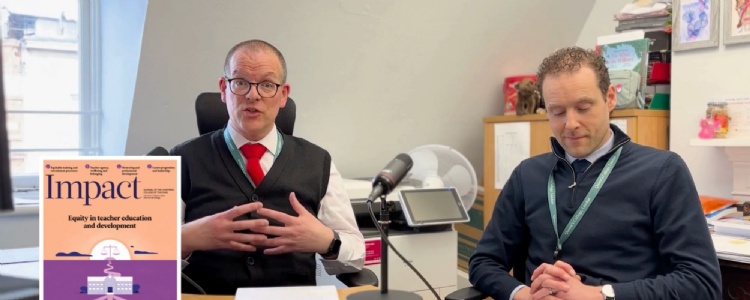
At Queen’s College, London, continuing professional development (CPD) is designed as an ongoing journey rather than a fixed programme. In a recent article for Impact, the journal of the Chartered College of Teaching, Dr Paul Davies (Deputy Head, Pedagogy & Learning) and Stephen Bailey (Senior Deputy Head - Academic) outline how the College is shaping a culture where teachers continue to grow and refine their practice.
Their starting point is straightforward: the quality of teaching develops through a combination of individual expertise, shared values, and sustained reflection. At Queen’s College, London (QCL), this is framed through the idea of “professional capital”, recognising what teachers already bring, where they want to develop, and how this aligns with the priorities of the school.
Queen's College, London Deputy Heads and authors of Impact article:
A thoughtful, individual approach to CPD
Continuing professional development at QCL is deliberately structured but never rigid. Teachers engage with a programme that evolves alongside their experience, allowing space for both guidance and professional choice.
Early Career Teachers (ECTs) follow a tailored induction that blends subject-specific development with mentoring and classroom-based enquiry. As they move into their second year, the emphasis shifts towards refining their practice and identifying areas of particular interest or expertise.
More experienced colleagues are supported to shape their own pathways. This might include targeted courses, action research, or further study over a longer period. These choices are made in conversation with the College, ensuring that individual ambitions connect meaningfully with departmental and whole-school priorities.
A culture of collaboration and professional dialogue
A strong sense of collaboration underpins this work. Regular teaching and learning briefings focus on classroom practice, while cross-departmental research groups create space for discussion and shared enquiry.
Because of the College’s size, these conversations are both accessible and productive. Staff know each other well and are able to exchange ideas openly, leading to a steady flow of practical insight across departments.
Professional learning is also supported through a central digital resource hub, where staff can revisit materials, follow ongoing work, and contribute their own reflections. This helps to sustain momentum beyond scheduled sessions.
Turning professional learning into practice
A key priority is ensuring that new ideas are not left at the level of theory. Teachers are encouraged to apply, test, and adapt what they learn, feeding it back into their departments and the wider school.
This creates an environment where CPD remains active and visible. Conversations about teaching are ongoing, and new approaches are explored with purpose rather than as isolated initiatives.
Supporting teachers at every stage
QCL’s approach is intended to support teachers throughout their careers. The aim is not only to develop expertise but also to maintain a sense of professional curiosity and engagement over time.
This has a direct impact on pupils. As teaching evolves, so too does the curriculum, including initiatives such as interdisciplinary learning at Key Stage 4.
Alongside academic outcomes, there is a continued focus on character education and preparing students for life beyond school. For teachers, this creates a setting where CPD feels relevant, sustained, and genuinely valued.
Explore opportunities at Queen’s College, London
To find out more about joining the teaching community at QCL, visit the work with Us at Queen’s College, London page to view current vacancies and opportunities.
Follow this link to read Stephen and Paul's Impact article about Continuing Professional Development.